
20 May 2026 · Medows · Dr. Soumyadeep Adhikari & Alapan Mondal
The Casualty at 11 p.m.
Forty significant clinical decisions in an hour. Six hours of sleep. The pitch every AI clinical tool gets wrong.
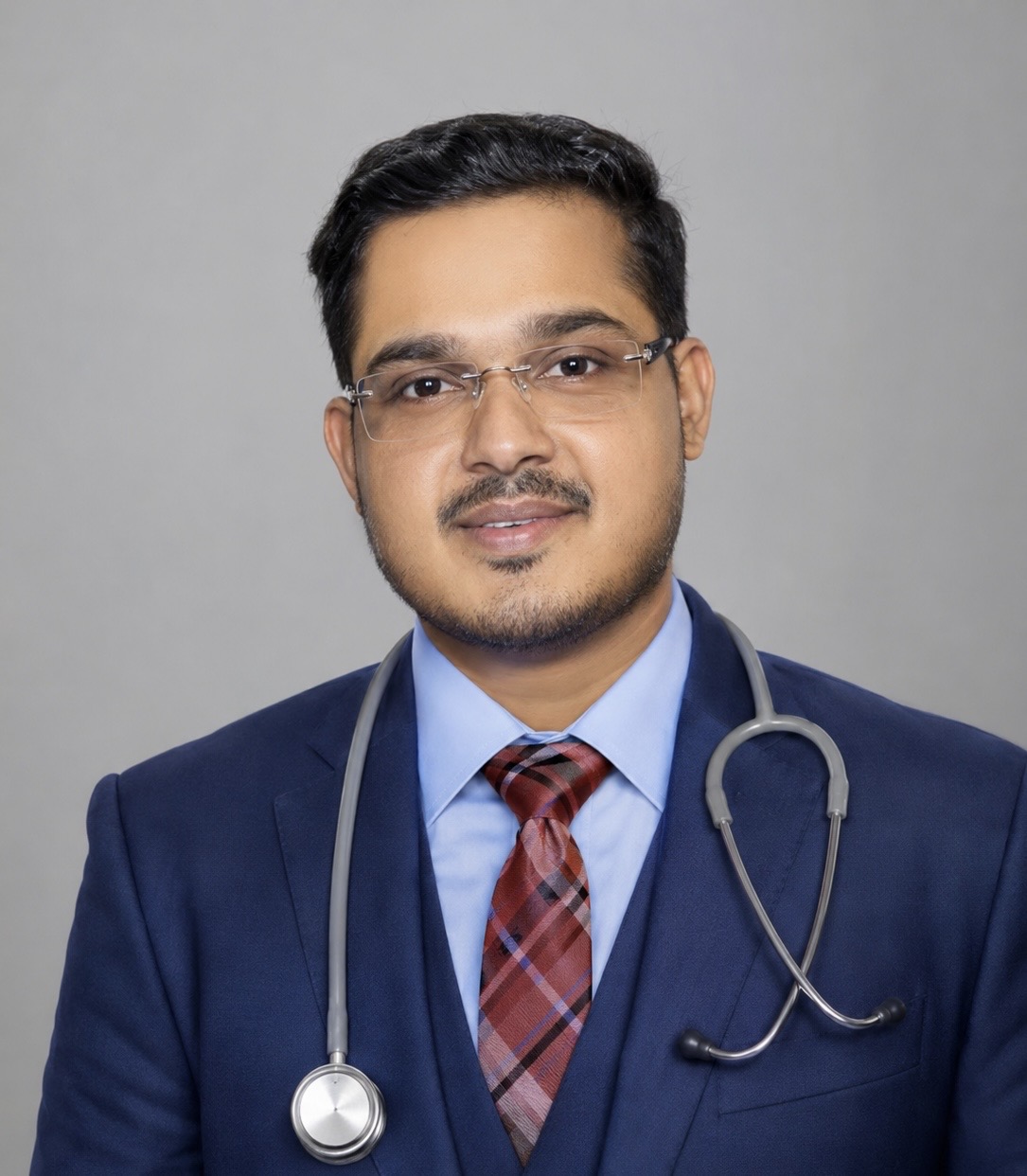

Dr. Soumyadeep Adhikari, Alapan Mondal
2 authors
The casualty of a tertiary government hospital in India at 11 p.m. on a Tuesday is its own ecosystem. There are usually 12–18 patients waiting, four on stretchers in the corridor, two on the floor, one being resuscitated in the trauma bay.
The on-call resident — usually a second-year PGT in medicine — is the only doctor available for everything that is not surgical or pediatric. He is making decisions on:
- The man with chest pain who has been waiting two hours
- The woman with breathlessness who arrived ten minutes ago
- The young man with a knife wound that the surgical resident is reviewing
- The elderly woman with altered sensorium whose family is loud
- The motorbike accident patient whose CT just came back
- The deliberate self-harm overdose patient whose poison is unclear
He has, by his own count, made forty significant clinical decisions in the last hour. Each one had a non-trivial differential. Each one involved a phone call to the appropriate specialty senior. Each one was made on six hours of sleep and three cups of canteen chai.
One "decision," unpacked
Forty in an hour sounds like an exaggeration until you take one item off that list and open it up.
The overdose patient. The tablets are paracetamol, the family thinks — they found a strip, they are not sure how many were in it, and they are not sure when. That single item contains: establishing a time of ingestion precise enough to be useful; deciding whether the four-hour level is even interpretable yet; deciding whether to wait for the level or start acetylcysteine empirically; getting an actual weight rather than an eyeballed one, because the infusion is weight-based; checking whether anything else was co-ingested; deciding whether the vomiting is the paracetamol or the anxiety; and calling psychiatry, who will want a risk assessment he has not had ten minutes to do.
That is eight decisions inside one bullet point, and three of them are pure arithmetic performed from memory while standing up. None of them is difficult. Every one of them is a place to drop a decimal.
Why "productivity" is the wrong frame
This is the environment in which AI workspace tools are sometimes pitched as productivity enhancers. The pitch is misguided. The PGT in casualty does not need more productivity. He needs fewer trivial decisions.
A productivity pitch says: "Use Medows to write your notes faster." A correct pitch says: "Use Medows so that the dose calculation for the paracetamol overdose is on the screen with the patient's weight already filled in, so you don't have to do mental arithmetic on hour-twelve of a 24-hour shift."
The difference between those two pitches is the difference between a tool that adds to the resident's day and one that removes from it. The published evidence on cognitive load and decision fatigue (Pignatiello et al., J Clin Psychiatry, 2020; Tierney et al. on EHR-related fatigue) is consistent on this point. Add more decisions and the resident makes worse ones.
There is also a straightforward reason the productivity framing fails commercially, which is that it is asking the resident to invest attention now for a return later. At 11 p.m. there is no later. Any tool that costs something on first use — a setup step, a login, a template to configure — will be closed and never reopened, correctly.
What can actually be removed
Sorting the forty is more useful than counting them. Some are load-bearing and some are not.
Removable — the tool should simply do these:
- Arithmetic on a known number. Weight-based doses, infusion rates, corrected values, anion gaps.
- Recall of a standard interval. When the repeat gas is due, when the level becomes interpretable.
- Re-finding a number that has already been recorded once. The weight from triage, the potassium from an hour ago.
- Re-typing a case that already exists in the record in order to ask a question about it.
- Remembering to chase something. A pending result is a system's job, not a person's.
Not removable — and a tool that touches these is doing harm:
- Which of the twelve waiting patients is seen next.
- Whether this breathlessness is cardiac or septic.
- Whether to wake the senior, and how hard to push when the senior says wait until morning.
- What to say to the family of the woman with altered sensorium.
The first list is where every hour of engineering should go. The second list is the job, and the resident is the only one in the building who can do it.
The automation that makes things worse
Worth stating plainly, because it is the obvious way to get this wrong: an autofilled number that is silently stale is more dangerous than an empty field. An empty weight field makes the resident go and weigh the patient. A weight field confidently showing 62 kg, sourced from a triage estimate made by someone who guessed, produces a wrong infusion with no moment of doubt attached to it.
So every value the workspace fills in has to carry its provenance in the same glance — 62 kg, entered by you at 22:40 versus 62 kg, triage estimate. The resident can then decide in one second whether it is good enough for what they are about to do with it. Automation without provenance is not a labour saving; it is a transfer of risk from a tired person who knows they are tired to a system that appears not to be.
The right pitch
Casualty at 11 p.m. is the place where the decision-removal benefit of a workspace is most visible. The right pitch to the casualty resident is not "this tool will make you faster." It is "this tool will make you not have to think about this particular thing right now."
And the honest measure of whether it worked is not minutes saved, which nobody in that department is counting. It is whether the resident got to the twelfth waiting patient with anything left. The burnout arithmetic and the casualty arithmetic are the same arithmetic, observed at different time scales.
Authors
Dr. Soumyadeep Adhikari, MBBS, MD
PGT General Medicine, RG Kar Medical College
MBBS from Calcutta Medical College. Currently a post-graduate trainee in General Medicine at RG Kar Medical College, Kolkata.
Alapan Mondal, B.Tech, M.Tech, IIT BBS
Founder, Medows
Founder of Medows. Building doctor-side AI workspaces.
Medows is a clinical AI workspace for the doctor on rounds. Learn more or write to alapan@medows.ai / alapanx@gmail.com.