
3 March 2026 · Medows · Dr. Soumyadeep Adhikari & Alapan Mondal
Hyperthyroid Storm — The Case I Almost Missed
A 28-year-old with fever, tachycardia, and hypotension. Sepsis was the obvious differential. The TSH was the answer.
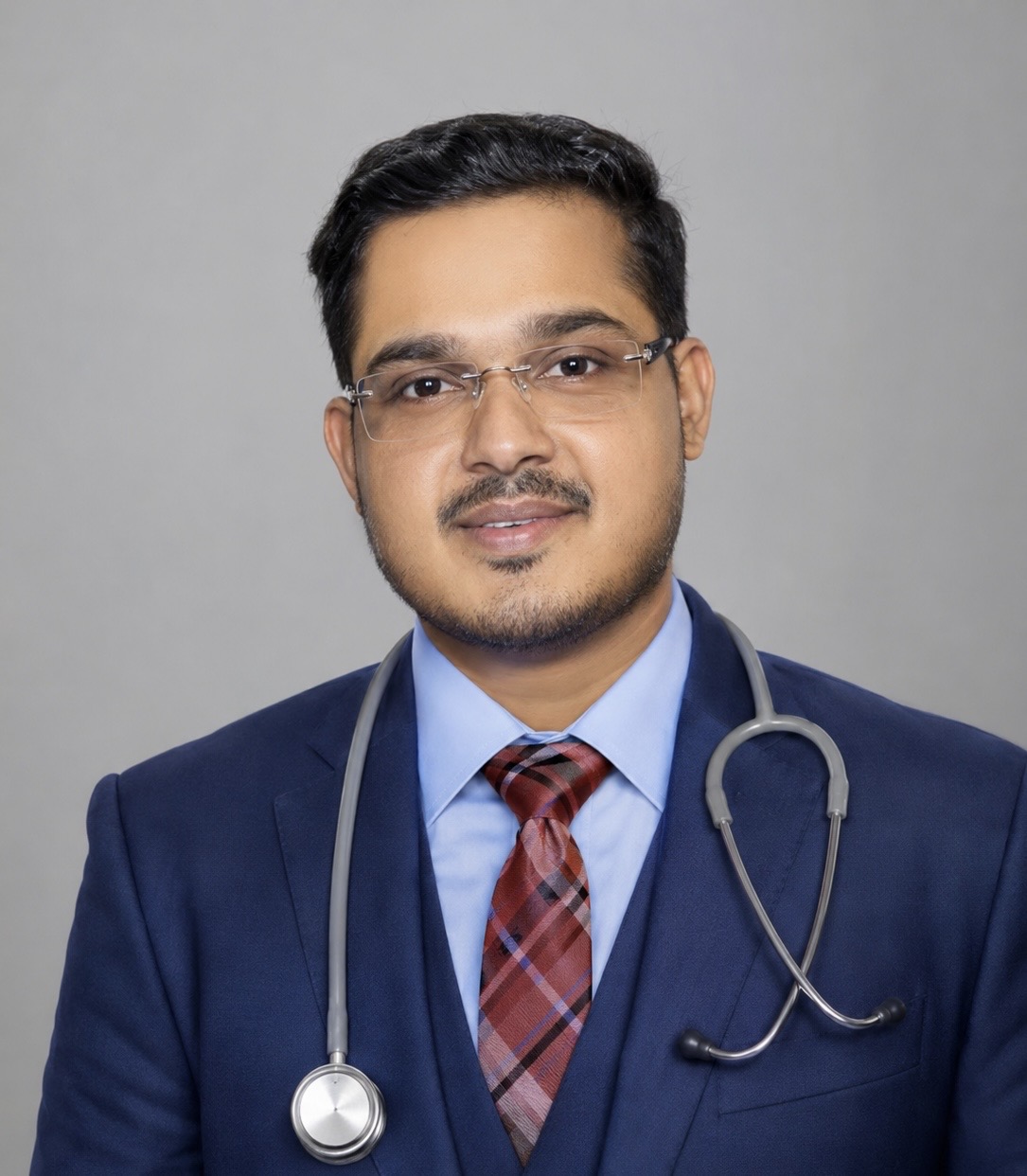
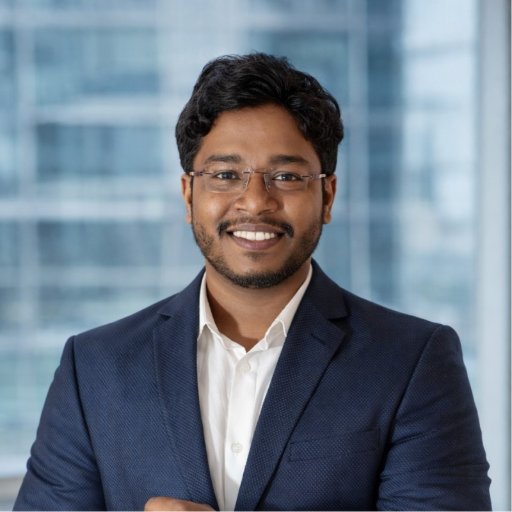
Dr. Soumyadeep Adhikari, Alapan Mondal
2 authors
A 28-year-old woman, casualty at 2 a.m. Heart rate 142. Temperature 39.4. Blood pressure 88/52. Agitated, sweating, vomiting. The on-call resident is also covering a sepsis admission and a paediatric seizure. She assesses the patient quickly: febrile, tachycardic, hypotensive. Sepsis differential. She orders blood cultures, fluids, paracetamol.
The senior, paged for an unrelated reason, walks past at 2:18 a.m. and looks at the patient. "Is her thyroid status known?"
It is not. The senior asks for a TSH and free T4 STAT. They are not in the standard sepsis workup at this hospital.
The TSH comes back at 4:10 a.m. — undetectable. Free T4 — 7.8 (normal upper limit 1.8). The patient is in thyroid storm. The treatment changes immediately: propylthiouracil, propranolol, hydrocortisone, iodine after one hour.
The patient survives. She would not have, on the sepsis pathway.
The sepsis guess was the right guess
It is worth being clear that the resident was not careless. Febrile, tachycardic, and hypotensive at 2 a.m. in a casualty is sepsis until proven otherwise, and it will be sepsis the overwhelming majority of the time. Starting fluids and cultures inside ten minutes is exactly what the protocol asks for, and on any other night it saves the patient.
That is what makes it a trap rather than a mistake. The obvious differential is obvious because it is usually right. The failure mode is not reaching for it first — it is that reaching for it first closes the list. Once "sepsis" is written at the top of the clerking, everything subsequent gets read as evidence for it. The tachycardia is septic. The agitation is delirium. The hypotension is distributive. Every finding fits, because every finding also fits the other diagnosis.
What separates the two at the bedside
The discriminators exist, and none of them takes longer than a minute:
- Known thyroid disease, or anti-thyroid medication recently stopped — the single highest-yield question, and the one the senior asked.
- A precipitant: infection, surgery, trauma, DKA, childbirth, or a recent iodine load such as contrast imaging.
- The neck and the eyes: goitre, bruit, exophthalmos, lid lag.
- A fine tremor, in a patient who is agitated rather than rigid.
- Warm, well-perfused peripheries with a wide pulse pressure — septic shock late enough to drop the pressure this far usually does not leave the hands warm and dry-flushed.
- GI features out of proportion: vomiting, diarrhoea, jaundice, all common in storm and easy to write off as "gastro plus sepsis."
- Atrial fibrillation in a 28-year-old, which should never be background noise.
There is also a scoring system, the Burch-Wartofsky Point Scale, which weights temperature, CNS effects, GI-hepatic dysfunction, tachycardia, and the presence of heart failure and a precipitant. A score of 45 or more is highly suggestive of storm; 25 to 44 suggests impending storm. It is a bedside score with no lab component, which is precisely its value at 2 a.m. — thyroid storm is a clinical diagnosis, and waiting for the TSH is how you lose two hours you did not have.
The treatment sequence is not arbitrary
The order the senior gave matters as much as the drugs. The thionamide goes in first to block new hormone synthesis. Beta blockade controls the adrenergic storm and, at sufficient dose, blunts peripheral T4-to-T3 conversion. Hydrocortisone covers a relative adrenal insufficiency and also reduces conversion.
Iodine comes at least an hour after the thionamide, and only then — given first, it is substrate for a gland that has not yet been blocked, and it can make the storm worse. This is the kind of ordering detail that is entirely uncontroversial in the textbook and entirely forgettable at 4 a.m. on a night where you have not sat down since ten.
What the AI actually contributed
This case is not about a bad resident. It is about the trap of the obvious differential. Febrile + tachycardic + hypotensive matches sepsis. It also matches thyroid storm, sympathomimetic toxicity, severe pheochromocytoma, neuroleptic malignant syndrome, serotonin syndrome, and a few others. The discriminating questions — known thyroid disease, exophthalmos on exam, tremor, recent iodine load — are not in the standard sepsis bundle.
A context-aware AI consult, given the same presentation, returns the broader differential by default. The Medows response for "28F, fever 39.4, HR 142, BP 88/52, agitated" includes thyroid storm in the differential alongside sepsis, with a one-line note on the discriminating exam features and the TSH/T4 order.
This is not because the AI is smarter than the resident. It is because the AI is not also running the paediatric seizure and the sepsis admission in parallel. It has the cognitive bandwidth to consider the second-most-likely differential. The resident, on a fourth-bed-in-thirty-minutes night, does not.
The delivery matters as much as the content. A differential you have to ask for is a differential you only get when you already suspect you are missing something — which is exactly the moment anchoring guarantees you will not ask. It has to arrive unrequested, attached to the vitals as they are entered, in one line that costs four seconds to dismiss. If it costs a page-load and a typed question, it will be consulted on the nights you did not need it and skipped on the night you did.
The generalisable part
Strip out the endocrinology and what is left is a claim about where ward deaths actually sit. They are rarely in the diagnosis nobody could have made. They are in the second-most-likely diagnosis, on the night the doctor had four patients and eighty seconds each, discarded before it was ever consciously considered.
That is not a knowledge problem, and more training will not fix it — the resident in this case could have listed the features of thyroid storm in an exam that morning. It is a bandwidth problem, and bandwidth is a systems property.
That bandwidth is what an AI workspace adds. Not omniscience. Just the room to consider the case that's not the obvious one.
Authors
Dr. Soumyadeep Adhikari, MBBS, MD
PGT General Medicine, RG Kar Medical College
MBBS from Calcutta Medical College. Currently a post-graduate trainee in General Medicine at RG Kar Medical College, Kolkata.
Alapan Mondal, B.Tech, M.Tech, IIT BBS
Founder, Medows
Founder of Medows. Building doctor-side AI workspaces.
Medows is a clinical AI workspace for the doctor on rounds. Learn more or write to alapan@medows.ai / alapanx@gmail.com.